

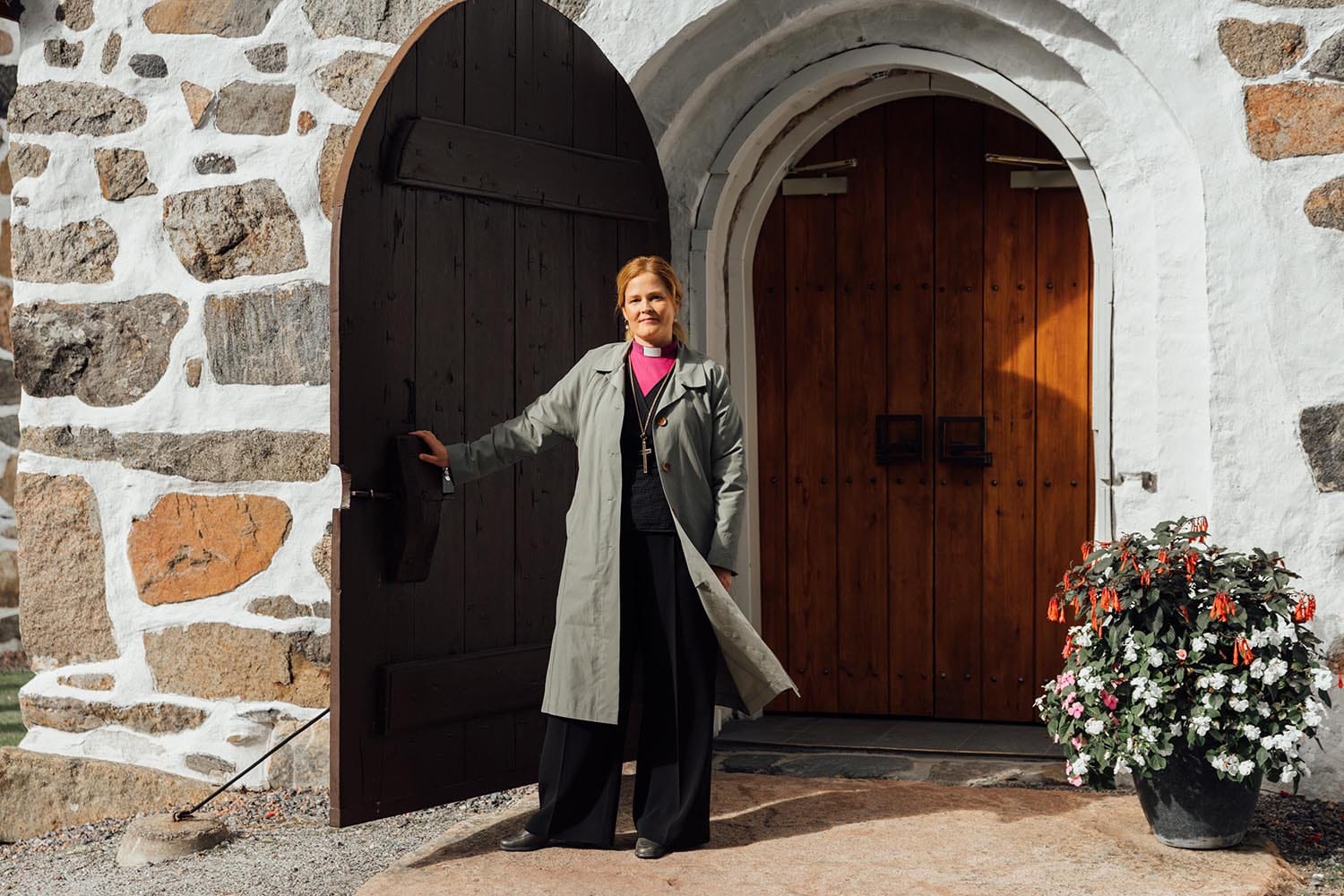
The Kordelin Foundation has honored the Bishop of the Archdiocese of Turku, Mari Leppänen, for her work as a staunch advocate of equality, human rights and justice. As bishop, she hopes to speak a language that people understand.
Finland is becoming increasingly polarised. The division between “us” and “them” is visible, for example, in hardening attitudes towards immigrants, minorities and women. According to Bishop Mari Leppänen, the church’s mission is to foster dialogue in which another person’s different way of thinking is seen not as a threat but as a source of richness.
“The church is still a significant actor in society. Its exceptional strength lies in grassroots work that reaches all kinds of people,” Leppänen explains.
According to her, political discourse is currently creating division, but this same phenomenon is not visible when people meet in real life. As an example of that, Leppänen tells us about Raisio parish’s “Common Table” event, where volunteers serve a meal to more than 150 participants.
“When we sat around the same table with the volunteers and participants, we quickly realised that we share a great many thoughts about what a good life looks like,” Leppänen says.
She believes that decision-makers bear a particular responsibility for the tightening of the social climate. Politicians have a significant role in determining whether their words create division or connection.
A Voice for Ordinary People
Mari Leppänen’s path to becoming a bishop was not straightforward. From her childhood home she absorbed her theologian mother’s and religious scholar father’s open-minded and unprejudiced approach to examining religions as a phenomenon. Leppänen studied folkloristics and, after graduating, worked as a biographical researcher.
“At that time, the Finnish Literature Society was collecting biographies, letters and diaries for its archive. I was able to immerse myself in the real, everyday life stories that lie behind official history writing. A deep interest in people still guides me,” Leppänen says.
She only decided to study theology after working as a communications officer for the church. Now Leppänen is grateful for her background.
“Before I became a priest, I already had a strong identity as a cultural researcher. I think that still shows in how I work. I don’t view society solely through the church’s window – alongside theology, I draw from cultural studies,” Leppänen says.
When Leppänen participates in public debate, her primary aim is not to advance the church’s cause. She hopes that her contributions give voice to those who struggle to make themselves heard in broader societal discussion.
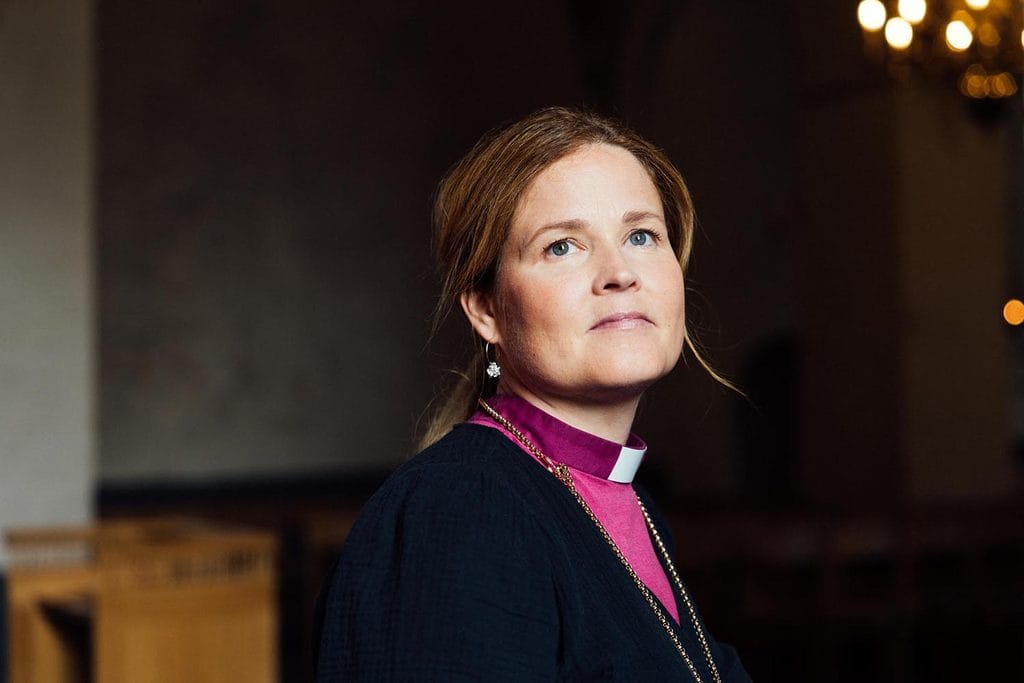
Cultivation Is the Ability to Read Others
Right now, Leppänen is concerned about the erosion of civil society, growing poverty among families with children, and the exclusionary rhetoric directed at immigrants. These are, in her view, serious signals of a hardening of values.
According to Leppänen, the measure of a cultivated society is how well it cares for those who cannot care for themselves. She reminds us that Finland’s rise from a poor developing country to its current status as a welfare state was founded above all on compassion and shared responsibility.
“Finland has historically been a small, sparsely populated country where it is hard to get by if you do not also know how to cooperate and lean on others. Our own wellbeing is always tied to the wellbeing of the people around us,” Leppänen says.
According to Leppänen, it is important for Finns to know their own history and Lutheran cultural heritage. Defending it must not, however, mean fearing or suppressing other religions or diversity.
“Literacy is a democratic skill. Cultivation is not just about being well-read, but about the ability to understand the world, other cultures, history and people. Art and science play a vital role in the survival of a small nation,” Leppänen emphasises.
Finland has historically been a small, sparsely populated country where it is hard to get by if you do not also know how to cooperate and lean on others. Our own wellbeing is always tied to the wellbeing of the people around us.
When a Priest Lost Her Words
Leppänen is not afraid to open discussions on topics that stir up a storm both inside and outside the church. In 2021, she and Johanna Hurtig co-authored the book Maijan tarina (Maija’s Story), which dealt with the sexual abuse of children in Conservative Laestadian communities. That same year, Leppänen was ordained as a priest, becoming the first Conservative Laestadian woman to do so. It was too much for the movement.
“I distanced myself from the movement in which I had grown up. At the same time, I lost my spiritual language. I had to learn a new way of speaking about God,” Leppänen says.
Suddenly there were no words for familiar subjects. Leppänen describes having made a conscious journey from the church’s traditional insider language to a new, more everyday way of speaking.
“Participating in public discourse is an important part of a bishop’s work. The space to speak is not, however, given – it must be earned anew each time. You have to be able to speak the same language and about the same things as everyone else. I hope that in my tone of voice, Christian faith and trust can be heard,” Leppänen says.
Recognition Strengthens Belief in One’s Own Work
The role of a bold public commentator comes with its pressures. Last spring, Leppänen took a sabbatical of a few months. The break meant space for thinking, quiet and a moment’s distance from work.
“I was longing for more courage. From a distance, I could also see all the good that I get to work with. It feels as though during the break my posture straightened and my thinking clarified,” Leppänen says.
The Alfred Kordelin Foundation prize feels to Leppänen like an affirmation of her work. It means a great deal to her that the work done within the church is valued. The recognition gives Leppänen the encouragement and backbone to hold firm even in the face of harsh criticism.